AI agents & LLM integration
AI agents grounded in your data, not in a demo.
Assistants that cite their sources, document pipelines that read real paperwork, agents that know what they are not allowed to do. LLM work from an operator who ships it to production, not to a slide deck.
Start a briefThe difference between a demo and a system
Anyone can wire a chatbot to an API in an afternoon. The work is everything after: grounding answers in your own data so the thing stops inventing, deciding what the agent may and may not touch, handling the day the model returns nonsense, and making the output land somewhere useful instead of another chat window.
My own proof is open source. Booboo is an operational brain I built and run: seven packages on npm, MIT licensed, serving a live knowledge graph over REST and MCP. You can read the code and judge how I build before you pay anything. I have also delivered AI model evaluation work through Upwork, scoring frontier model outputs against real acceptance criteria.
Trust boundaries are a feature
The agents I build are told what they cannot do in code, not in a prompt. An agent that drafts your client emails should be physically unable to send one. That rule comes from running agents on my own businesses, where the cost of getting it wrong lands on me first.
The handover
Built for you.
Owned by you.
AI agents & LLM integration, handed over in your own account.
- RAG assistants grounded in your documents, with citations you can check
- Document pipelines: unstructured paperwork in, structured records out
- MCP servers that make your systems queryable by any AI tool
- Agent workflows with human approval gates where money or reputation moves
The work
behind the words.
Published case studies of running systems. Open them and take a look.
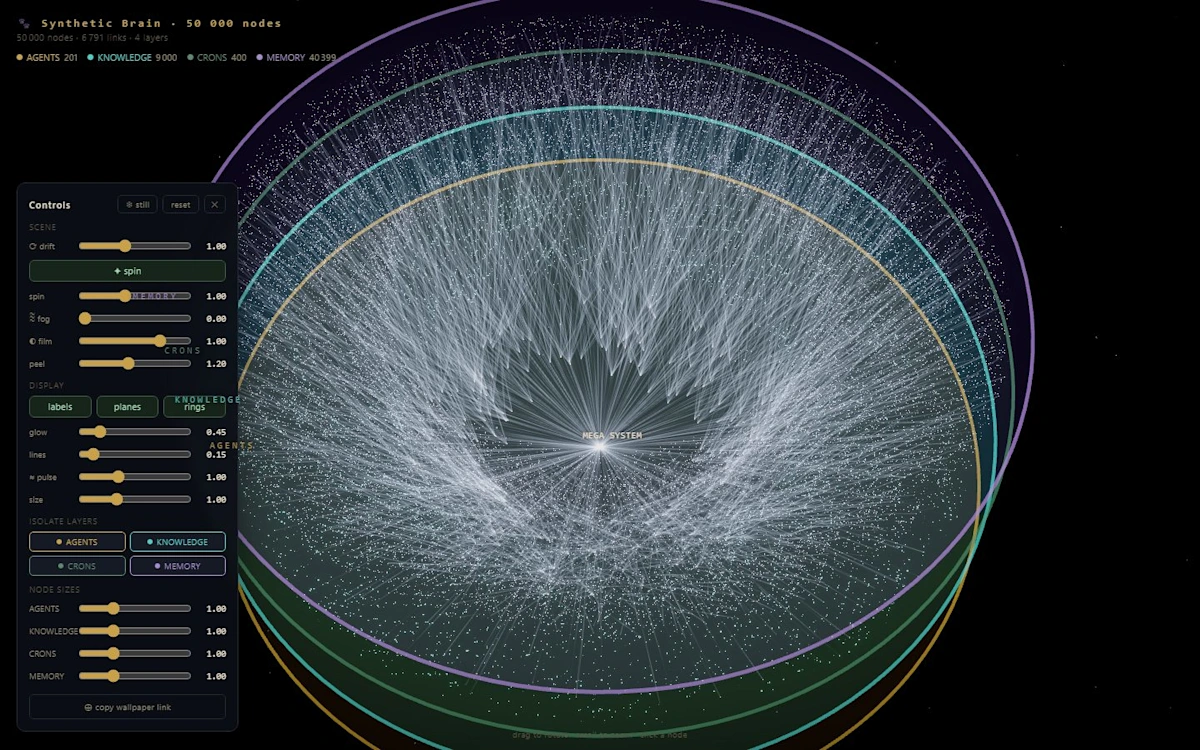
Booboo — five AI systems fused into one queryable 3D brain
Open-source engine that turns an AI stack's wiring, knowledge, memory, agents and automations into one rooted graph, served over REST + MCP, rendered in 3D at a million nodes. Seven packages on npm. MIT.
Read the case ↗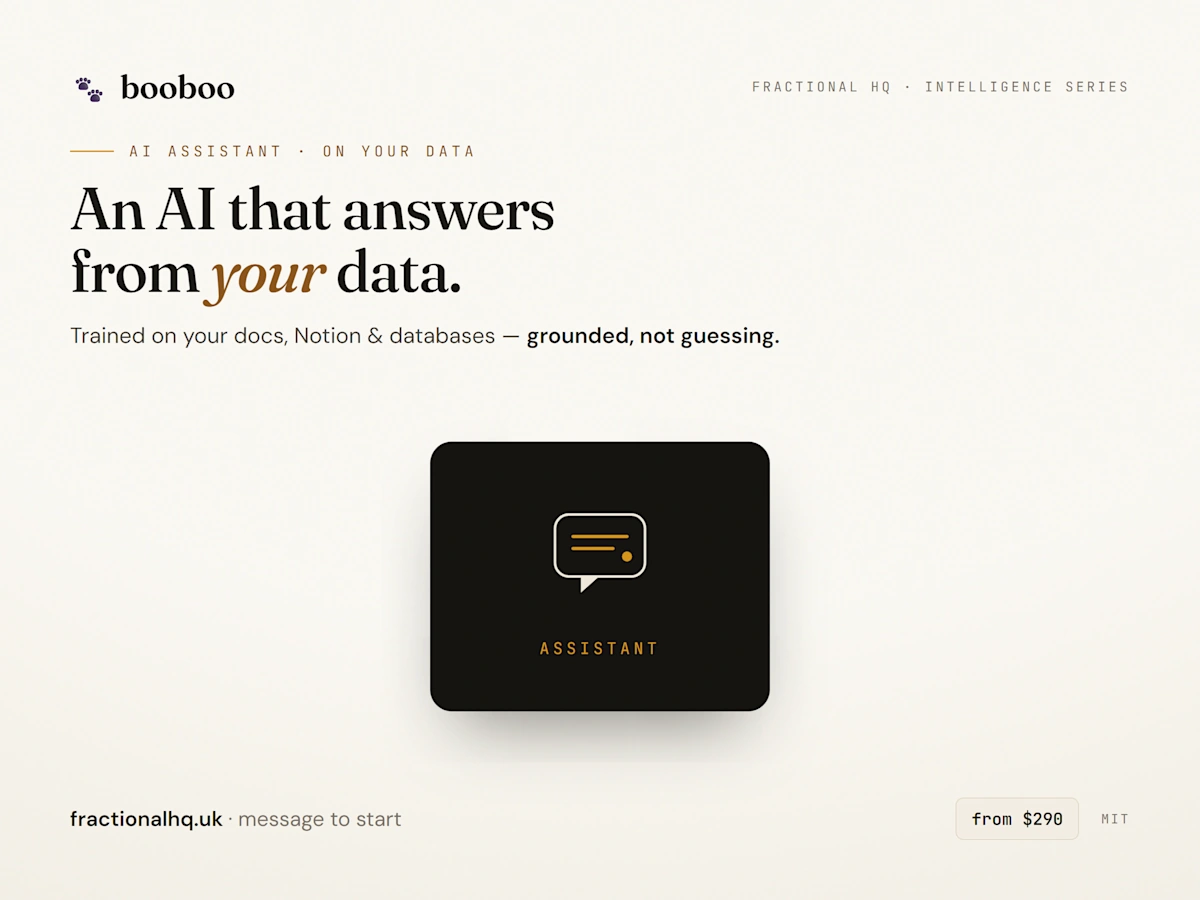
An AI assistant that answers only from your real data
Retrieval-augmented AI assistant grounded in real documents and a running system's own knowledge. Answers cite their source instead of guessing, with a companion Obsidian-ready vault that makes the same knowledge browsable as plain markdown.
Read the case ↗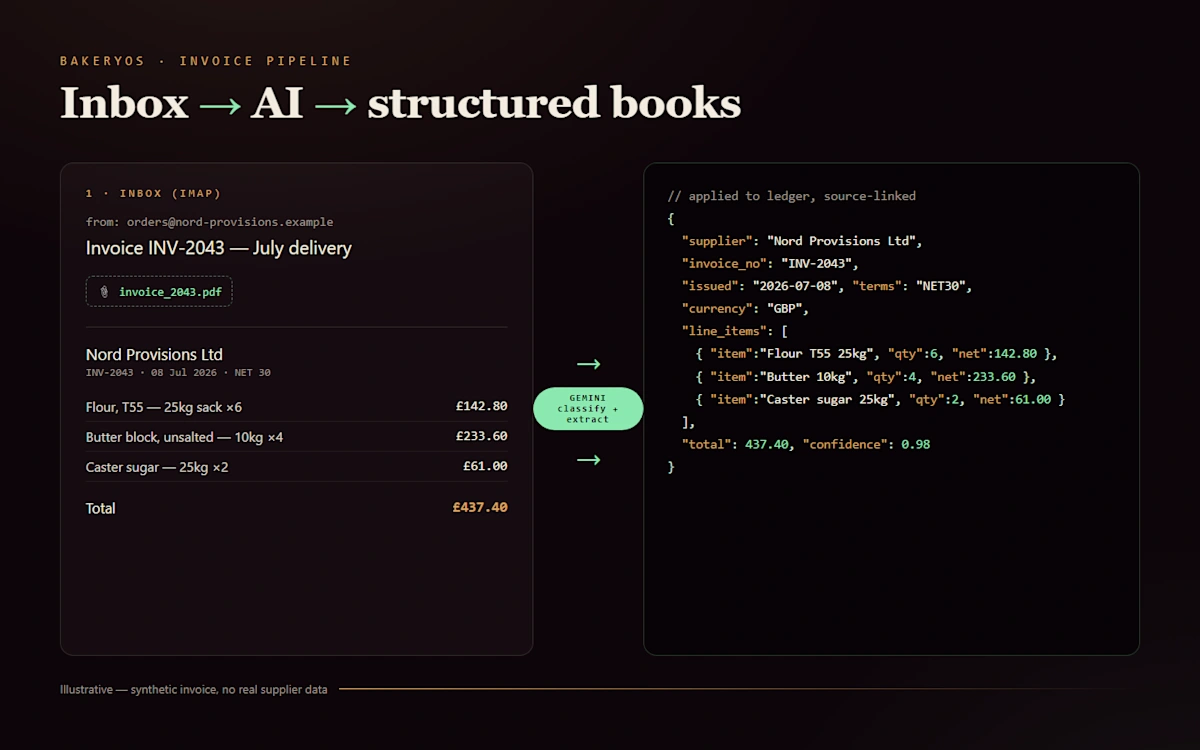
Invoices that read themselves — inbox to structured books
Supplier invoices arrive as PDFs in a mailbox and leave as structured rows in the books. Anything the AI is not confident about is flagged for a human.
Read the case ↗Let's make it work
Start with
what you need.
One line is enough to start. You get an honest answer on fit, and a number rather than a discovery call.
Start a brief